






As businesses handle growing volumes of digital and paper-based information, manual data entry can become time-consuming and prone to errors. Employees often spend hours transferring information from invoices, receipts, forms, and customer records into business systems, leaving less time for higher-value tasks.
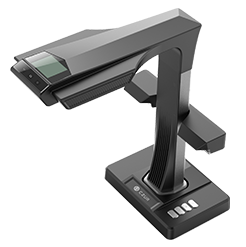
Data entry automation helps streamline these processes. Technologies such as optical character recognition (OCR) can extract text from scanned documents, while automated form processing and workflow tools can capture information and transfer it between applications. These solutions can reduce repetitive work, improve data consistency, and increase efficiency.
However, successful automation requires more than choosing the right tools. Businesses should consider document quality, data accuracy, system integration, and information security. Human review may still be necessary for unclear or sensitive records, so starting with repetitive, well-defined tasks is often a practical approach.
To explore the available methods, tools, and key implementation considerations, read The Guide to Automating Data Entry.


